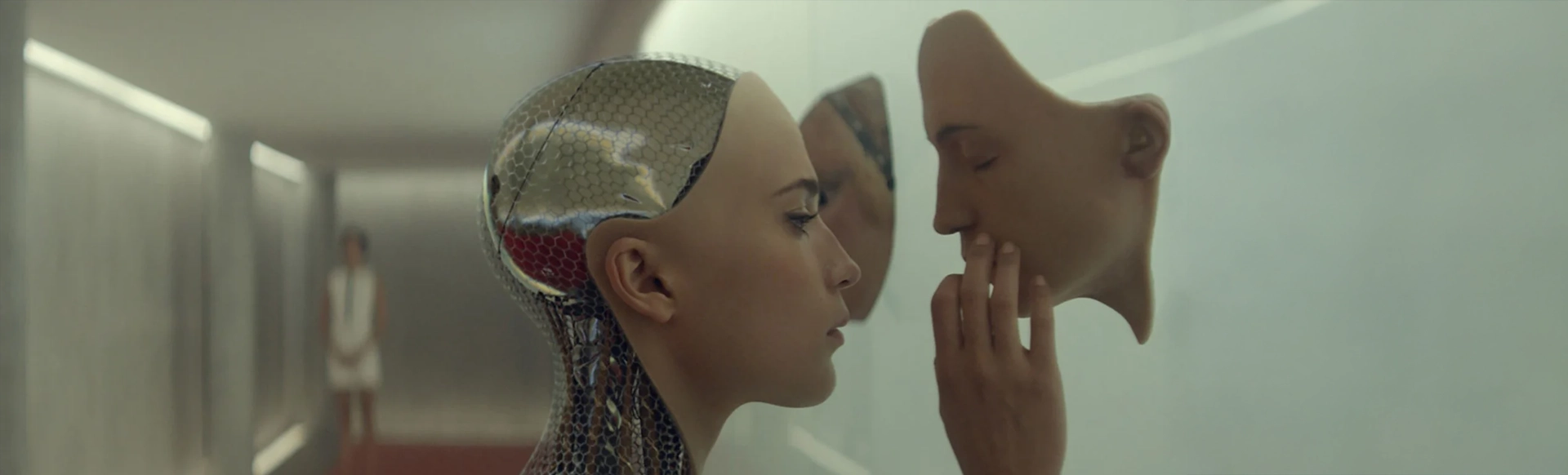
The Creative Revolution: How Generative AI Transforms Films & Design
There is a creative revolution happening that no one could have expected, and it's already bigger than anyone knew. Just a few years ago, the idea of a computer writing a script, editing a video, or even coming up with a complete marketing campaign by itself would have been considered as science fiction. Today, to not only achieve this is possible, but it is also becoming the new standard.
In the whole Middle East, generative AI is no longer a side experiment or a gadget that is only used to impress people. It is becoming the mainstay of the daily routine of employees of agencies, designers, marketers, and filmmakers. What used to take weeks of work is now being handed over in days, and even the most far-fetched ideas are now within your reach.
One can already witness the shift taking place. For instance, the creative agencies located in Dubai have begun executing the campaigns driven by AI which were earlier considered a future possibility. Moreover, the film and media hubs in Abu Dhabi are embracing AI to make the production process faster and smoother. As a result of the direct integration of technology into Vision 2030 in Saudi Arabia, the country is witnessing the rise of new studios, design labs, and supporting creative industries. The giant leap we are moving towards is not just the arrival of a new technology but also the advent of a new culture of creation.
Generative AI: Creativity Meets Technology
Generative AI is fundamentally a creative technology. While conventional programs operate strictly according to preset rules, generative AI picks up patterns from a vast dataset of images, videos, texts, or sounds, and then creates new content based on that learning. What is accomplished is not to be seen as a mere duplication but a new one: a new story, a realistic digital drawing, or a new video that seems to be the work of professionals.
For AI content creation, this means that what once took weeks can now take hours or even minutes. A storyboard that a creative team would spend days sketching can be drafted instantly by an AI tool. A marketing agency in Dubai can test multiple ad visuals in one afternoon, adjusting colors, layouts, and messages with the help of AI creative tools.
But perhaps the most exciting shift is not about speed alone. Generative AI is pushing boundaries of imagination, giving creators new possibilities that might not have been considered before. Instead of replacing artists, it expands the creative toolkit like moving from a paintbrush to Photoshop, and now, to something far more intelligent.
AI In Filmmaking
One of the very few sectors where we can see the illustrative power of generative AI the best is definitely the film industry. In essence, a movie is made through numerous overlapping stages: scriptwriting, storyboarding, the construction of the set, the application of visual effects, editing, and marketing. All these stages are perfect AI candidates for support and even acceleration.
Suppose we had a writer in Abu Dhabi who provided a skeleton for a story to an AI platform. The tool doesn’t stop at just one function; it merely can generate as well of a dialogue, scene description, or even a different ending. Not only that, it doesn’t take away the human factor the club of directors and writers still call the shots but it considerably accelerates the process of ideating and drafting.
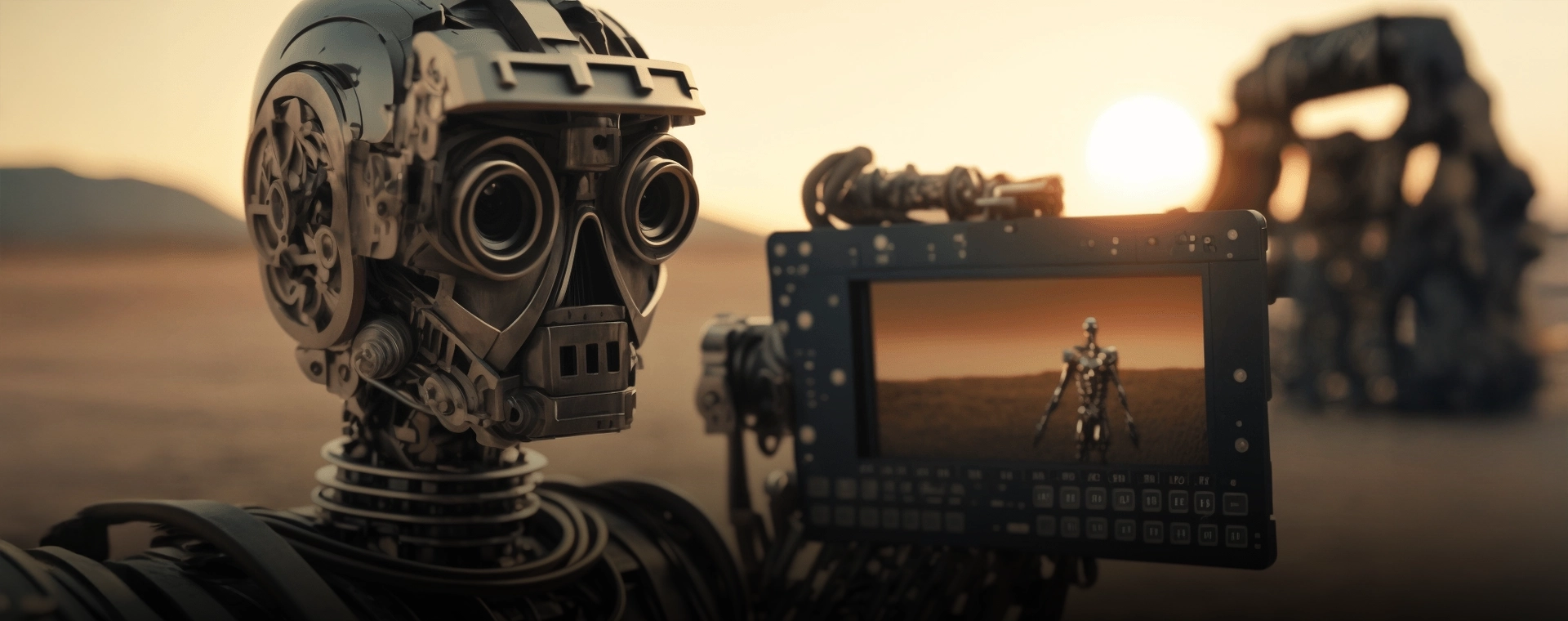
Visual effects are next to benefit from this revolutionary technology. Generative video AI enables creators to build virtual worlds, duplicates of digital, or even integrate a variety of characters or objects into a scene practically for just a small portion of the original cost. The practice of combining the help of a green screen and some expensive CGI, which is now achievable through AI, is just one step towards the democratization of film production even for smaller studios.
Saudi Arabia, making a lot of money on cinema as part of the Vision 2030 project, is deeply inclined towards AI in filmmaking. Using AI-driven storyboarding and editing, film studios in Saudi can not only speed up the production but also take more local stories to the foreign lands. This pairing of cultural storytelling and advanced technology looks set to change the game of the region’s film industry.
Marketing in the Age of AI Content Creation
If film shows how AI helps craft stories, marketing shows how it delivers them to the world. Campaigns today must be faster, more personalized, and more visually engaging than ever before. Traditional processes of designing ads, writing copy, and testing variation cant keep up with the speed of digital trends. This is where AI content creation is reshaping the industry.
In Dubai, creative agencies are experimenting with AI art Dubai to produce striking visuals for billboards, social campaigns, and immersive experiences. Instead of commissioning weeks of design drafts, AI tools can generate dozens of concepts in minutes. Copywriting tools that are powered by AI come up with the first drafts of marketing slogans, personalized messages, and even full campaign scripts, which marketers later work on to improve.
The main strength is in personalization. AI has the ability to produce many different versions of an advertisement to suit various demographics, languages, and even different cultural aspects. A promotional campaign in the UAE can be transformed in no time to be attractive to the local audience, whereas the same campaign in Saudi Arabia can be made to have a different cultural character by using AI design from Saudi Arabia.
Moreover, this is not simply a time saver. Brands can now test and optimize their campaigns in a way that is totally different from the past. Instead of putting all the money into one big idea, and then hoping it will succeed, marketers can actually conduct hundreds of micro-tests simultaneously, in which they can keep tweaking their content until it fits perfectly with their target audience.
The Tools Driving the Change
Behind the big news, the actors to watch are the AI creative tools. They give the users a new layer of support for their work across design, writing, video, and audio. Some of these tools can produce very realistic images only by using text prompts, others generate background music for a specific scene, and there are even some that can finish the whole website or social media carousels in just a couple of clicks.
The designers and artists in KSA and UAE are not afraid of these tech tools. They just want to boost up their work! If a designer hired AI design tools, for instance, to do the packaging of a product, they would be able to make and present numerous versions with different layouts in a short amount of time.
The same goes for musicians and AFI filmmakers who want to use AI technology in their sound recording careers. Instead of spending a lot on soundtracks, one AI system might be able to create the track that would fit the particular atmosphere of a certain scene. Likewise, AI video generators can also help you get quality short-form videos right on TikTok or Instagram, in this way, small creative teams can achieve productions that look like it is from large studios. The result is a system where creativity no longer has limitations in time, money, or even traditional workflows. AI expands the boundaries of the possible, allowing creatives to concentrate more on storytelling and strategy.
Challenges and Creative Questions
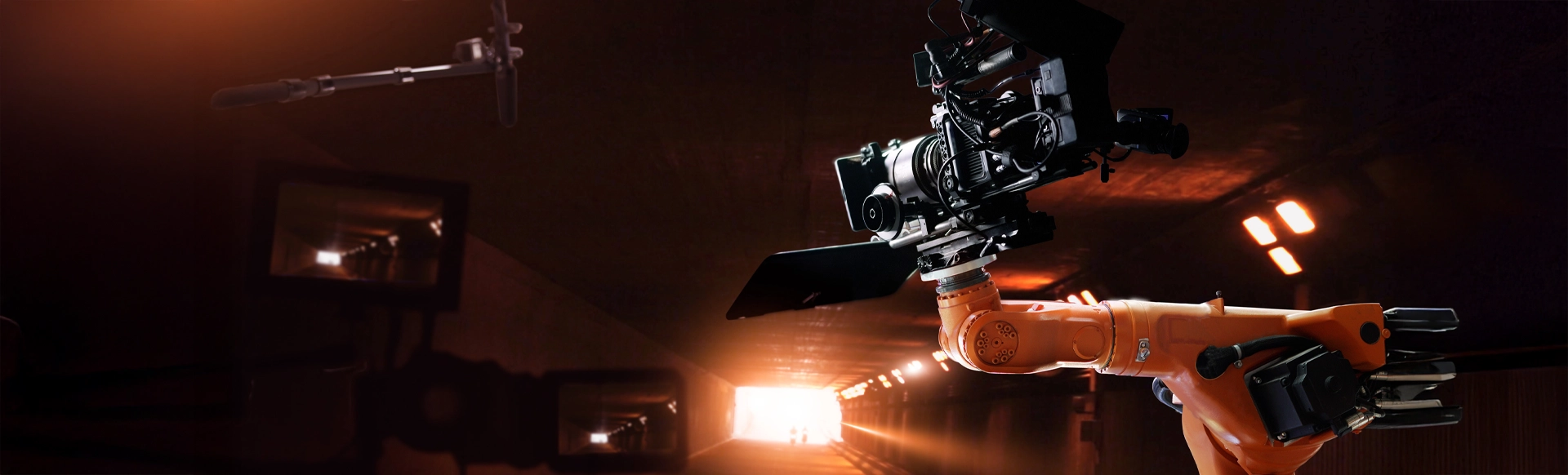
Challenging aspects will be there inevitably with every new technology. The main issues of conversing around generative AI are concerning creativity and ownership. Who gets the right of AI-generated content? Let's say an AI designs a logo or writes a script, so is the producer of the prompt, the AI company, or a combination of both the ones to claim the work?
Besides, there are concerns related to the genuineness of content. If very little content in marketing becomes AI-generated, will the audience feel a gap between brands and themselves? In the case of generative AI, if the assisted creation of entire sequences happens, would it imply that human storytelling is getting less original?
Another challenge is the ethical use of AI art. Sometimes content-generating platforms closely mimic already existing works, which leads to questions about copying and copyrights. The UAE and Saudi regulators are getting ready to figure out how to keep the use of AI tools safe and sound in creative sectors.
Nevertheless, not all experts believe that generative AI will lead to the extinction of human creativity. The human role will still be as a director, curator, and collaborator rather than the one who works alone.
Final Thoughts
The future of creative industries will be none other than a story of competition versus collaboration. AI lets the creative process move faster and smoother, gives it diversity, and allows the use of complicated techniques. People, on the other hand, bring vision, cultural sensitivity, and emotional connection. When coupled, the final outputs can be the one that is neither faster nor personalized but even more creative and unique.
It is not hard to see a scenario where a creative firm in Dubai has at its disposal the AI tools to generate campaign visuals in no time and simultaneously human strategists edit the storyline so that it is attractive not only in Arabic but also to the UAE audience. Imagine a Saudi film studio getting the help of generative video AI for the production of its visual effects and then the directors take over to ensure cultural authenticity. This is the ideal use of generative AI.
The question after the unveiling of more tools and the adoption of industries will be no longer about the willingness to use AI in creative works but rather about responsible, efficient use, and in ways that reach one’s imagination further rather than hinder it.
Generative AI is changing the way people think about creativity. AI in filmmaking, content creation by AI for marketing are just some of the examples where technology has become the great enabler. What is amazing is the fact that the UAE and Saudi Arabia are not just passive users of the tools, but they are real players who are determining the evolution of these two countries in the global creative economy.
For the talent, it is a mixture of a problem and an opportunity. Learning how to collaborate with AI is no longer optional it is becoming a must-have skill. On the other hand, the firm, the production house, and the design house, this development is an opportunity to do the same or even more with lower resources and to access their audiences in innovative and attractive manners.
The takeaway from this is that in the future, creative works will be neither authored by humans only nor by machines solely, but rather a combination after a joint side-by-side effort. In UAE and Saudi Arabia, where there is a combination of aspiration and innovation, the future is already happening.