
Why Immersive Rooms Create Stronger Learning Memories
You know that strange moment when a space seems to recognize you? The lights dim just so, a faint vibration hums under your feet, and the sound seems to breathe with your movement. For a second, you’re not standing in a room you’re inside something alive. Your mind forgets where the walls end and the world begins.
That’s the quiet magic of immersive rooms. They don’t just show you something; they make you feel it. Your senses sync up, your brain leans in, and before you realize it, you’ve crossed from observer to participant. And the craziest part? Your mind records that feeling as if it truly happened.
We remember what we feel, not what we’re told and immersive experiences are built on that truth. They speak the language of the body first, the intellect second. That’s why they stay with us long after the lights fade.
In this piece, we’ll break down how presence actually works, we’re diving into the science behind that magic why presence feels so real, how immersive environments tap into memory retention, and what makes them one of the most powerful storytelling tools of our time.
Let’s begin by asking, What is presence, and why should we care?
What Is Presence And Why It Matters
In simple terms presence is a mental condition when a person feels that they are part of a surrounding rather than outside it. It is mainly referred to in the VR context, however, additionally, it can be a physical or a virtual immersive room, a dome with projections, and even interactive installations. The term presence means that the brain is no longer telling you that it is a presentation it starts to perceive the environment as real, at least for now.
So why is it important? The reason is that the creation of memories depends heavily on how real something is shown to be. If a person finds an experience to be happening to him/her, then the brain marks it as important. The higher the feeling of presence, the more your neural circuits consider the experience as one that should be kept in memory rather than being just background noise.
It is not the same as watching a video or reading a slide. In these cases, the brain often considers the content as a secondary source - something to consume. However, with immersive experiences, the brain is fully engaged as a whole participant: you see, move, sense, and emotionally respond. That involvement increases the memory trace.
"why the brain loves multisensory experiences"
The Neuroscience Behind Immersive Memory Retention
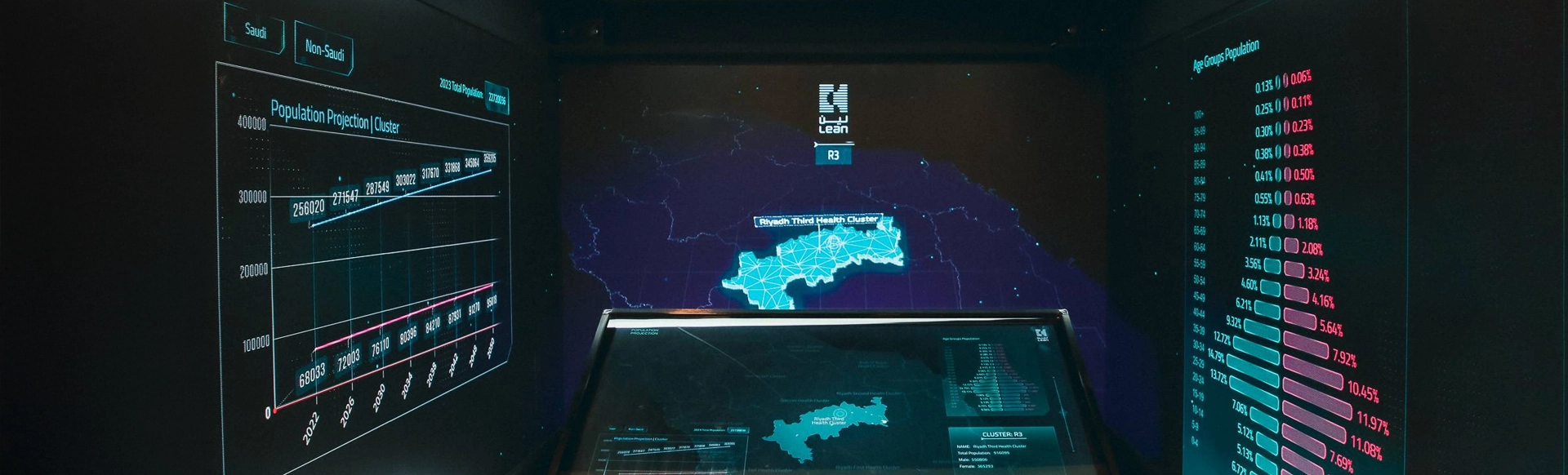
Let’s go over the actual mechanism of the brain when a person gets a memorable experience. Making a new memory is a process that involves three main stages: encoding, consolidation, and retrieval.
Encoding is the very first stage ; Your brain gathers information through your senses at this time what you see, hear, touch, smell, or feel through movement. As more senses are involved, the memory becomes stronger. This is why you may completely forget the text of a book but still remember the odor of a campfire or the sound of rain. These sensory layers provide more details to hold on to for your brain.
After that, the brain goes to consolidation ; It is the phase where your brain structures the information and stores what you just experienced. The brain links the new data to what the person already knows. Emotional feelings play a great role here. Your brain accepts it more if the thing makes you feel curious, amazed, or surprised. Emotion acts like glue-it helps the brain secure the memory in place.
In the end, there is retrieval ; This is when you remember something you learned and lived through. The more vivid and detailed the original experience, the easier it is to retrieve. If you do not only remember the picture but also the sound, smell, or feeling that came along with it, the whole memory can be triggered by one small opening.
Indeed, this is the reason memory is enhanced in immersive rooms. They engage all your senses simultaneously, i.e., vision, hearing, touch, and even feeling. Thus, your brain acquires more methods of storing and recalling the moment. The hippocampus (responsible for space and context), the amygdala (which links emotion), and the sensory cortex (which processes what you sense) are all functioning together inside your head.
The effect is straightforward yet excellent, memories that are not only in your brain but live on they are alive. They seem vivid, detailed, and difficult to forget because, to your brain, they were authentic.
Why We Remember What We Feel
The truth is we don’t remember everything we see. Most things we come across in a day fade out almost instantly. But the moments that move us? Those stay. That’s because the brain doesn’t hold on to neutral information. It remembers what feels important. Emotion, surprise, beauty they all act like a highlighter for memory. When something stirs a feeling, your brain says, Hey, don’t lose this one.
immersive experiences are the exact reason that they have a long-lasting impact. In these rooms, you receive a combined effect of light, sound, and movement that not only to evoke your senses but make you feel amazement, wonder, and curiosity. Imagine being in a place that is so close to nature yet it’s artificially made. The lights dim, and all of a sudden, you hear the ocean waves coming from all sides. You can also smell salt in the air. A cool breeze touches your face while the floor underneath you is slightly tilted, just enough to simulate the boat's rocking motion. For a moment, your senses trick you, and they say that you are not inside the building, but you are on the water.
This is the sort of thing that the immersive rooms do to you. Instead of watching a sequence, you are engrossed in the scene right away. Your senses get involved, your emotions get onboard, and your brain issues the verdict, This happened.
Moreover, due to the involvement of your emotions, the memory stays. The brain is no longer storing information but experience. And that is the true power of immersive learning. People don't just watch, they engage. They respond. They experience. And that emotional energy is what makes the past that could have been easily forgotten to be remembered forever.
Experiential Design: How Memories Are Engineered
Every unforgettable immersive experience begins with one essential element: experiential design. It is the skill of creating spaces that convey messages through feeling rather than words, spaces that not only show a story but also make you experience it as if it is happening around you.
An immersive and well-designed room is not just a mixture of screens and projectors. It is a carefully planned and balanced ecosystem where every detail is a piece of the whole and they function equally. The mood and lighting can be changed according to the close connection. The sound is linked to your movement, providing a dialogue between you and potential. You cannot distinguish the line between reality and digital because the visuals which are a combination of physical and digital are almost unnoticeably merged.
The main thing that holds all this up is coherence: when every sensory element is on the same level perfect, your mind stops doubting and starts accepting. However, if one tiny detail is out of place for instance if you see ocean waves but do not hear any water the deception shatters. When coherence is reached, presence takes control, and the experience changes to the one you are living rather than something you are seeing.
This is the point where the magic of the experiential designers comes in. They use spatial audio, projection mapping, motion sensors, and responsive lighting to coordinate the feeling.Emotion is reacted to by every movement, sound, and visual transition which are designed for you in real time. The more your actions shape the environment, the more your mind becomes involved. You are not a spectator anymore but an active member of the story. And that’s where true connection happens. When design evokes emotion and interaction, the brain doesn’t just record what happened it remembers how it felt. Immersive environments built with this philosophy don’t simply convey information; they create emotional architecture experiences so cohesive and human that your memory naturally wants to return to them, long after you’ve stepped outside the room.
The Power of Multisensory Storytelling
The very foundation of human memory is storytelling. We recall stories much more easily than unprocessed facts. Multisensory storytelling essentially humanizes one example of this phenomenon: it combines sight, sound, movement, and feeling to create a single, understandable narrative.
Immersive storytelling allows the viewer to grasp the idea immediately through images, while the audio, in turn, connects the emotion to the story, and the sense of touch or movement helps to deepen the realism of the experience. To illustrate, an installation dealing with the environment could integrate altering temperatures, serene woodland sounds and live projection to simulate global warming. Visitors are not only educated but also emotionally involved. The transformation from information to experience is marked by that emotional engagement. The brain cannot merely say, “I learned something.” Instead, it says, ”I have an experience”.
"how the brain processes multisensory experiences"
Presence in VR and Beyond
The concept of presence in VR is basically the next level of immersion. With virtual reality, the entire user’s visual, auditory and kinesthetic spheres are merged to create the simulation. The presence is more pronounced the closer the sensory feedback is to reality.
Nonetheless, VR is not the sole platform that facilitates this phenomenon. Physical immersive spaces, mixed-reality domes, and interactive setups can also tap into the same psychological triggers. The common factor behind both digital and physical presence is that memory retention is enhanced. The brain tricks itself into feeling as if it is dealing with the actual thing when the deception is powerful enough. This explains why a person can still jump when a bullet comes flying towards them in VR or get dizzy if he looks down from a virtual height. The brain experiences the situation and this makes the memory long-lasting.
The Impact of Immersive Technology on Memory

The influence of immersive technology on memory is one of the highlights of recent neuroscience and design-related fields. Researches have confirmed that people remember what they learned during, and after, immersive experiences, not only for a longer period but also with higher vividness.
The reason is that immersive technology replicates the natural learning process of the brain which includes sensory-rich and emotionally charged interaction. It gives the brain both the logical and emotional sides. It doesn’t only provide information but also by experience.
For instance, brand communications will benefit of the stronger brand recall effect that is the result of customer participation in immersive technological installation events. For educators it will be a deeper engagement of students. For museums and cultural institutions it will be a way to keep stories alive after visitors have left.
Immersive rooms are not merely tools for activation of interest but also tools for design of memory.
The Future of Immersive Experiences
Generally, tech has a huge effect on experiential that the immersive environments can no longer be considered just places of novelty but they are rather becoming essential. Experiential spaces are transfiguring into a more lab-like setting used for therapy, brand spaces, classrooms, and storytelling arenas.
In the future, the creative and neuroscientific aspects will be even more interconnected in experiential design by incorporating technologies such as biofeedback, adaptive sound, and emotional AI that can instantly respond to a person's feelings.
Designers no longer seek to awe the audience with their bright visuals alone but rather seek to evoke, train and keep a relationship with the audience in a manner that is in-imitable by traditional media.
Final thoughts
We live in a world saturated with information, but memory doesn’t follow volume. It follows presence. That’s why immersive rooms leave a mark: they create an experience your brain treats as real, not content to consume.
When experiential design aligns sight, sound, space, and interaction, the body believes first and the mind follows. Emotion tags the moment as meaningful. Movement anchors it in place and context. That’s the formula behind immersive learning and stronger memory retention: people don’t remember what they were told; they remember what they lived.
And as presence in VR and interactive environments keeps evolving, the impact of immersive technology on memory will only deepen. The next wave won’t just be visually impressive. It will be adaptive, responsive, and human-aware, built to shape attention, emotion, and recall in real time. Because the goal isn’t to create a room people walk through. The goal is to create a moment they carry with them.