Projection Mapping Techniques & Interactive Installations
Building Immersive Spaces: Best Practices for Projection Mapping & Interactive Installations
Have you ever found yourself in a space that seemed to come alive, shifting and transforming with every step you took? The one that makes you feel like you are not there, but somewhere else, like you have entered a completely different world? That is the magic of projection mapping techniques and interactive installations. These are not just buzzwords that they are changing how we experience art, entertainment, and even brands.
What if you are walking into an exhibit where the walls become alive and they react to your every movement, or you are sitting in a theater where the stage changes in real-time with AR-powered elements? Interested? You definitely should be. These immersive experiences are not just a trend; they are the future of spatial design which is a combination of technology and creativity to create unforgettable moments.
In this article, we will talk about the best ways to create really impactful projection mapping and interactive installations while also exploring deeply the world of immersive spatial design and AR stage experiences. If you are an artist, event planner, or just a person who is curious about the way these experiences are created, then keep reading. We are going to talk about how projection mapping and interactive tech are changing the game.
To understand the basics of how projection mapping works, check out Projection Mapping on Wikipedia.
The Power of Projection Mapping Techniques
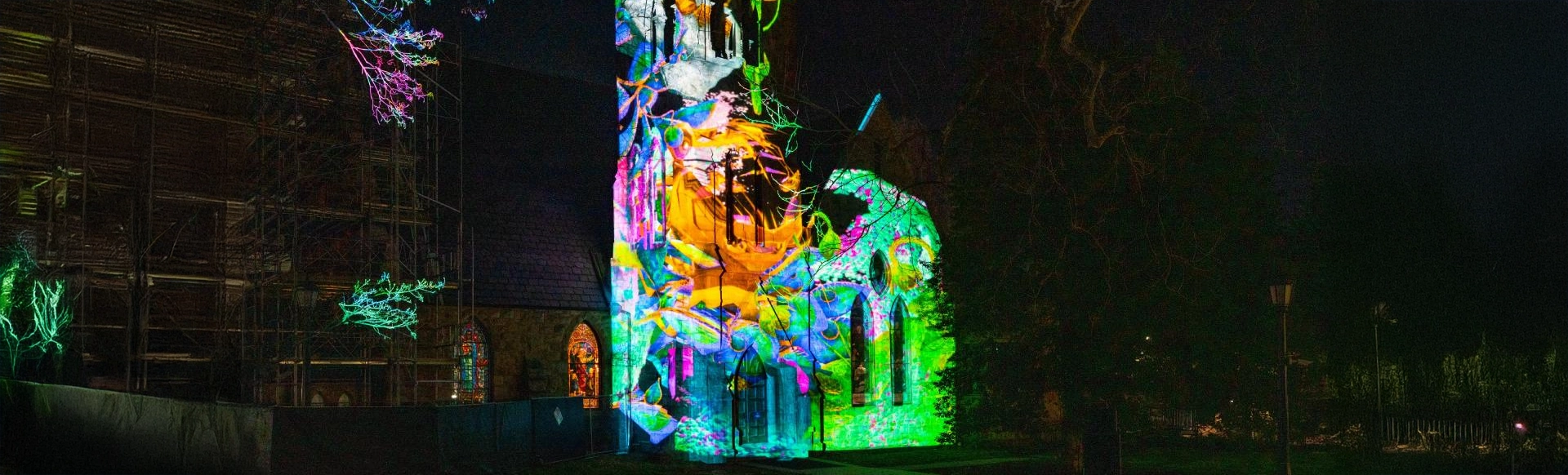
Projection mapping is a technology that lies at the very heart of immersive spatial design. It includes the usage of projectors that can change the faces of objects, walls, or even the whole buildings into animated displays. To put it briefly, the aim of creating them is not to keep the visuals as stiff but to let them become the interaction themselves.
Understanding Projection Mapping
The technique of projection mapping provides the method of showcasing complicated video contents on diverse surfaces such as sculptures, buildings, or even the inside of a room. However, it also comes with a challenge: the surfaces have to be more than just holders of a video they have to become the storytelling mediums by being perfectly outfitted with the content.
Many people still believe that you can only see a projection mapping at a big open-air festival or at a grand theater event. Today, however, we witness that it is gradually making its way into small, indoor spaces such as museums and brand experiences. Designers nowadays are able to strike the absolute perfection of the projection by utilizing the precision of contemporary projection mapping methods that the images can be directed at even the tiniest corners and thus the viewer can feel as if the transmission is specially for viewer.
Best Practices for Projection Mapping
Get to Know Your Space: Knowing the space you have to work with is paramount in the success of any projection design. It’s common to come across the walls that are not only smooth and flat but also textured and curved. To make the visual performance of your projections be the mix of natural and impactful, it is advisable to first discover the geometric traits of the surfaces you intend to work with. You can employ 3-dimensional modeling tools to get an accurate layout of the space.
Focus on Seamless Integration: The task of edge blending is essential when the usage of multiple projectors is at hand as it helps in the cancellation of the visible seams, thus making the display a single, continuous work of art. This is the main objective of a presentation to be seen as one uninterrupted piece of work. Use Layers for Impact: One of the strategies to be more effective is the layering of the visuals. Movement and depth can be very useful elements for the integration with the layers thus giving the projection more energy, as if the place was the one that was working and not the space. Adaptability is Key: In the first place, one should think about how the projections will perform under any light or audience condition. There are some up-to-date methods which enable the performers to do modifications in real-time thus ensuring that the content is always at its freshest and continuation, despite the surroundings.

The Role of Interactive Installations in Immersive Experiences
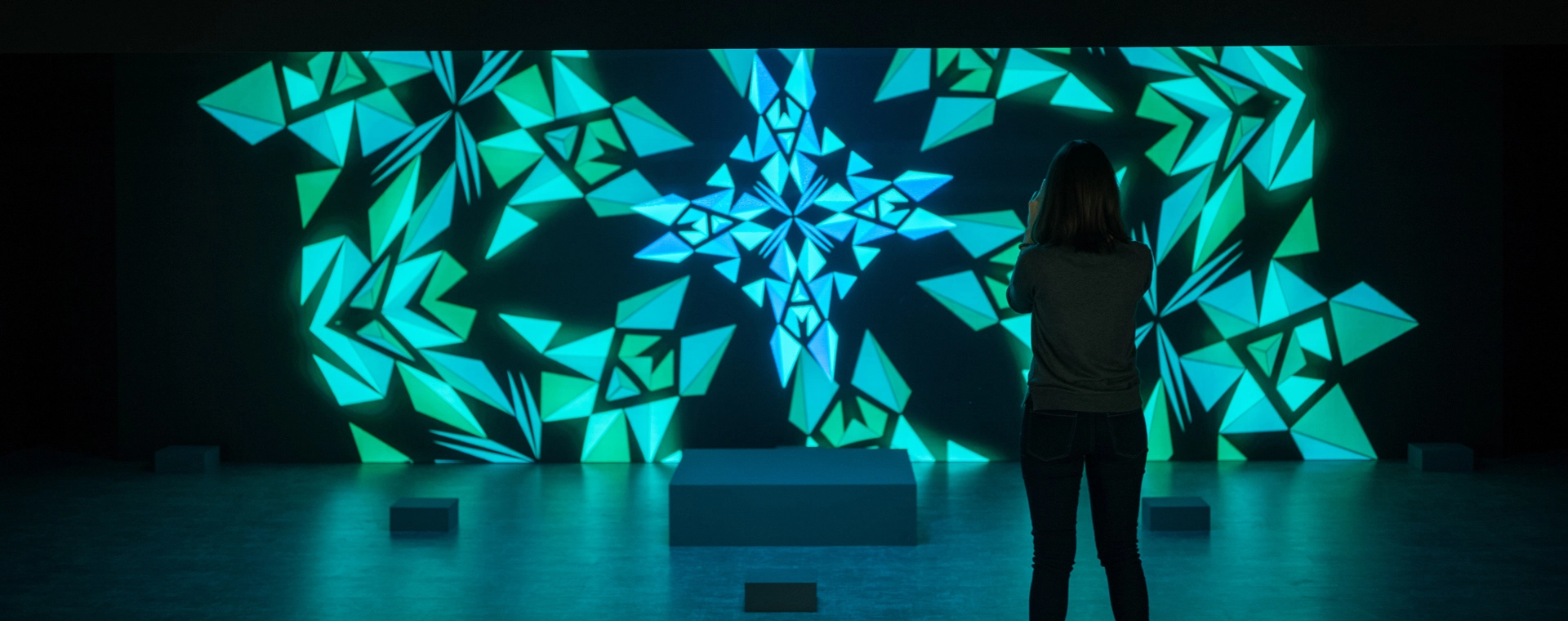
While projection mapping is all about visuals, interactive installations take things a step further by encouraging the audience to be a part of the experience. Gone are the days of passive viewing now, the audience’s actions can change what they see, hear, and feel. From museums to corporate events, these interactive elements make every space feel like a living entity.
What Makes Interactive Installations Work?
Imagine an exhibit at a museum where you press a wall and the display not only detects your press but changes the pictures shown or starts playing a sound accordingly. That is the power of interactive installations. In these setups, by employing sensors, cameras, motion tracking, or touch screens, the users can become the content creators by influencing what is shown or played in real-time.
For example, motion detectors can figure out the position of a person and thus, along with that, modify the content to greet and interact with that individual. It is ultimately immersive spatial design where one can hardly tell the difference between the real and the digital worlds. The interaction is always there, whether it's an AR stage experience or a touch-activated display, hence it makes the experience far more engaging and memorable.
Tips for Creating Interactive Installations
Keep It Intuitive: Interaction that is intuitive leads to a good user experience. Complex operations can cause frustration to the users, in particular, if they do not figure out straight away how to interact with the installation.
Personalize the Experience: Make each viewer’s experience unique by using data such as user input or movement. Not only does this method make the users more attracted to the experience, but it also allows for the installation to be dynamically updated at all times.
Consider the Context: Analyze not only the location but also how people are expected to move through it. Interactions should be designed in such a way that they support the natural walk of the people and at the same time keep the area open and inviting.
Balance the Tech and Storytelling: One can easily fall into the trap of overusing fancy technology, but it is worth remembering that the story is the heart of any immersive experience. The tech used should help tell the story, not steal the spotlight.
Designing for Immersive Spatial Design and AR Stage
Now, let’s talk about the bigger picture. The true power of immersive spatial design is when projection mapping and interactive elements come together in AR stage experiences. Just visualize a play in which stage alterations are going on automatically, the actions of the actors or the music being the factors, and this change can be actually felt. It is certainly no longer fiction, it is rapidly evolving to be the fact.
How AR Stage Experiences are Changing the Game
In brief, AR (augmented reality) has changed radically the gaming and retail industries, but its astonishing power delays the stage design sector a giant leap forward. Phantoms created by AR in the theatre overwhelm us as they blend with the reality making the final stage, which interacts with the actors, musicians, or the dancers. The technology grants for the dynamic projections that may shift following the storyline or the coming scene thus providing the performers with the outer world they are to interact with.
Crafting an Engaging AR Stage
Layering Virtual and Physical: By means of AR, stage designers are enabled to add layers of the virtual into the physical stage. Just think of easy backgrounds altering due to the actors’ interaction or the advanced interactive set pieces characters in the story.
Real-Time Interactivity: Live events incorporating real-time interactive elements a scenario in which the actions of the audience dictate the projections or sound lready being an immersive spatial design act of higher nature. To illustrate, the spectators could employ their mobile gadgets or the use of motion sensors for bringing about the modifications in the virtual world.
Spatial Awareness: Be it with the help of motion-tracking cameras or AR headsets, the knowledge of the actors' or the audience members' location is what finally guarantees that the virtual projections are in the correct place to the physical one. This is the way of a real fusion between the world of sense and that of fantasy.
The Importance of Storytelling in Immersive Installations
Storytelling is the element that is most important in any projection mapping or interactive installation. Having just the technology wouldn’t be quite enough there should be a story that connects all the parts. In any case, it is the story that is being told, whether the projection is an abstract idea or a sequential narrative, and the pictures and the presence should be the story’s helpers.
Why Storytelling Matters
Storytelling is the main reason for audience engagement, which is the emotional connection the viewers make with the experience. Moreover, it is this element that turns the whole thing into a coherent journey and leads the audience through the place in a friendly manner. The combination of projection mapping and interactive installations with a well-thought-out storyline results in an experience that is not only impressive but also leaves a lasting emotional impact.
The Future of Projection Mapping and Interactive Installations
With the progression of technology, the possibilities for projection mapping techniques and interactive installations are limitless. One of the ways in which the use of AR in live stage shows is revolutionizing the performance art industry, on the other hand, interactive installations are becoming the most used method in big museums, retail spaces, and events. The next step in immersive design is the integration of these technologies so effortlessly that they form a single entity with the environment, thus making the space itself a part of the experience.
Final Thought
From projection mapping techniques to interactive installations, immersive spatial design has an incredible amount of potential that we are merely beginning to explore. The future is definitely promising for those who want to combine technology with creativity through an AR stage experience or a fully interactive museum exhibit. The innovations are not only for big productions but also for anyone who wants to engage their audience in a deeply, memorable way.
So, if you were to devise an immersive experience, it would be a reminder that it is primarily about the story, the space, and the technology. The outcome is something really unforgettable when all these factors are combined. Do you have the desire to create your own immersive world?