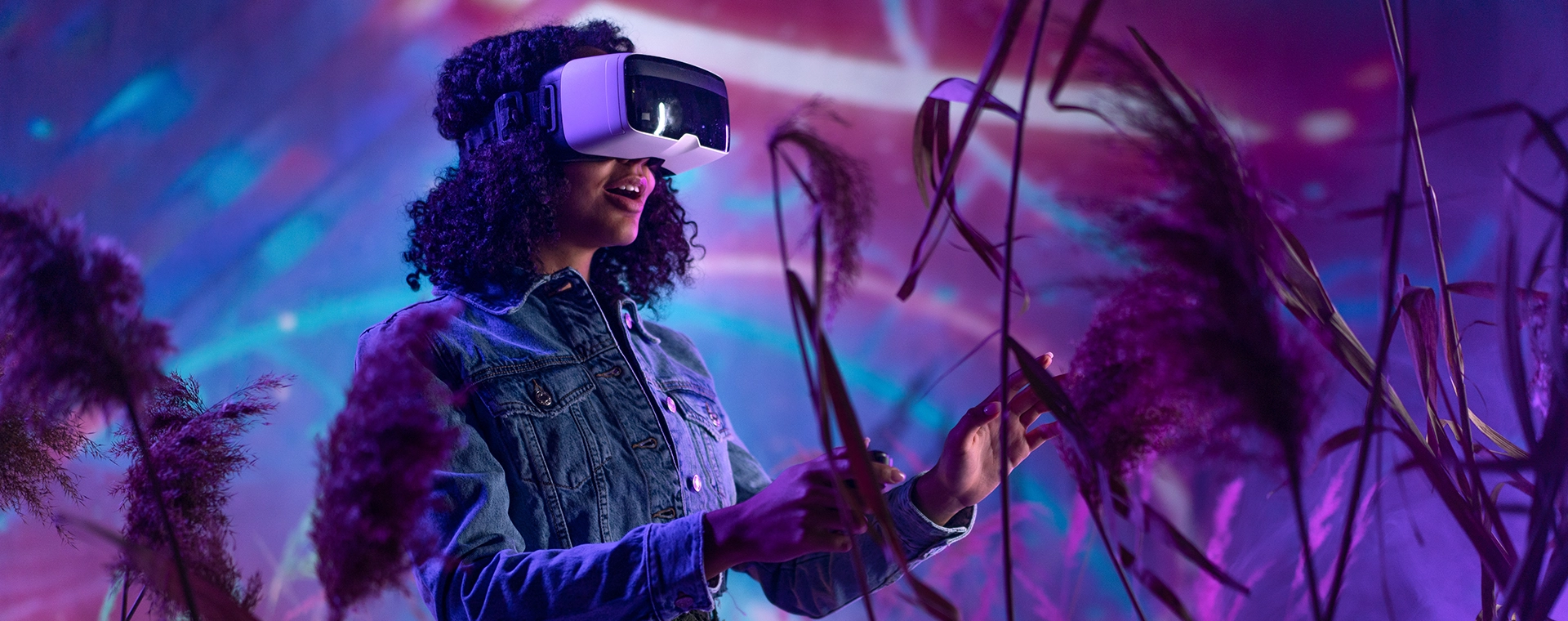
How Technology Is Transforming Experiential Marketing Campaigns
The era of showing up with a banner stand and a brochure is over. Today, the brands commanding attention at events, exhibitions, and activations across the UAE are doing something fundamentally different — they are engineering environments where technology does not support the experience. Technology is the experience.
The numbers confirm the shift is accelerating. The global immersive marketing industry was valued at $6.9 billion in 2024 and is projected to reach $29.7 billion by 2030, growing at a CAGR of 28.6% (Grand View Research, 2024). Meanwhile, 75% of global brands are expected to adopt some form of AR or VR for marketing by 2026 (Markets and Markets, 2025). For brands operating in the GCC — a region that has been setting the global standard for large-scale immersive experiences since EXPO 2020 — this is not a future consideration. It is a present competitive reality.
This article breaks down the four core technologies redefining experiential marketing campaigns: augmented reality, virtual reality, holograms, and projection mapping — what each does, why it works, and what best-in-class deployment looks like in the region.
Why Technology Has Become Central to Experiential Marketing
The expectation gap between audiences and brands has never been wider. Consumers — particularly in high-income, tech-saturated markets like the UAE and GCC — have been exposed to world-class immersive experiences at events like EXPO 2020, Gitex, and Formula 1. Their baseline for what constitutes a remarkable brand activation has risen sharply.
Technology bridges that gap by giving brands capabilities that were simply not possible through physical means alone: real-time personalisation, spatial storytelling, multi-sensory engagement, and the ability to transport an audience somewhere entirely different — emotionally, visually, and physically.
"Fans expect to be immersed in their favourite shows, and they want these activations to feel immersive, personal, Instagram-ready, digital and social." — Kelly Jo Sands, SVP of Digital and Marketing, DirecTV
The most important insight embedded in that quote is the word personal. Technology does not just make experiences bigger — it makes them more specific. And specificity is what converts a visitor into an advocate.
Augmented Reality: Blending the Real and the Digital
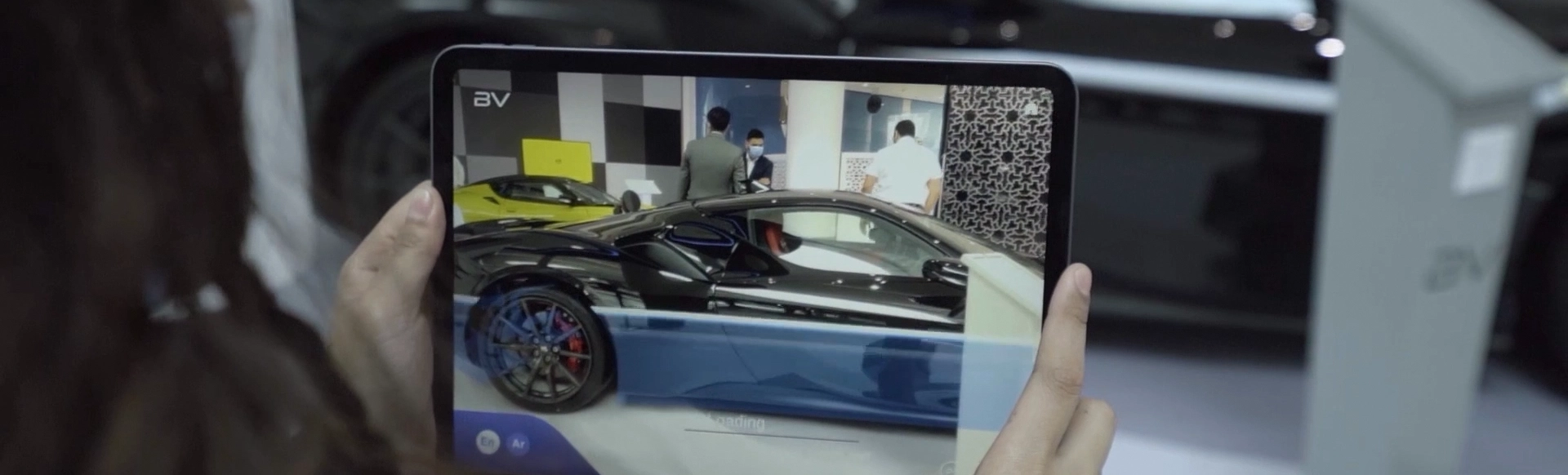
Augmented reality overlays digital content — 3D objects, animations, data, narrative — onto the physical world, typically through a smartphone, tablet, or AR glasses. In an experiential marketing context, it transforms an ordinary environment into an interactive one without requiring the audience to step into a separate space.
The engagement impact is substantial. AR product experiences generate 200% more engagement than their non-AR equivalents, and AR activations in retail environments have increased foot traffic and try-on rates by up to 60% in pilot programmes (BrandXR, 2025).
In the GCC, AR has moved well beyond product try-on features into immersive storytelling territory — pavilions using AR portals to show visitors two eras of a city at once, retail environments where products assemble themselves in mid-air, and cultural exhibitions where centuries of heritage materialise through a device screen. For brands, AR's greatest strength is accessibility: it meets the audience exactly where they are — device already in hand — and extends the brand experience beyond the physical activation into social sharing and beyond.
Virtual Reality: Full Immersion, Full Control
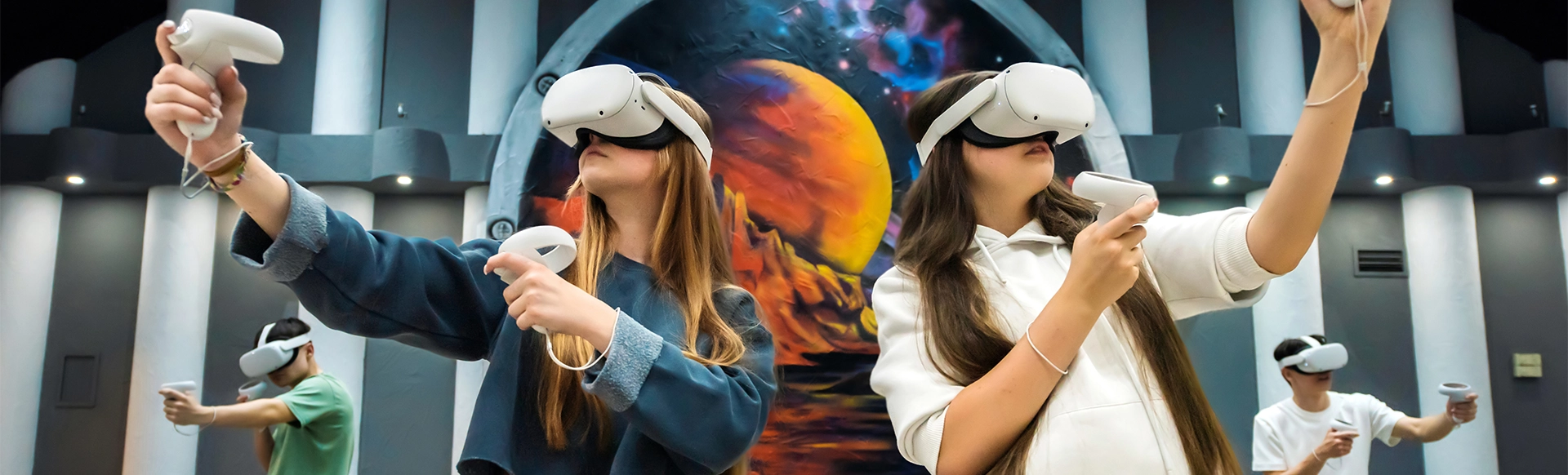
Where AR adds to the real world, virtual reality replaces it entirely. A VR headset gives brands something unprecedented: total control over every sensory input a visitor receives. There is no competing signage, no ambient noise, no distracting foot traffic — just the brand's story, delivered in a 360-degree environment the audience steps fully inside.
This level of immersion produces measurably stronger emotional responses. Studies consistently show VR experiences generate higher emotional engagement scores than any other media format, which directly translates to stronger brand recall and purchase intent.
VR is particularly well-suited to product launches, destination marketing, training environments, and high-consideration purchase categories — sectors where helping a consumer feel the product or experience before committing is commercially significant. In the GCC, government tourism bodies, automotive brands, and property developers have all deployed VR at major trade shows to give audiences access to environments — a development, a national park, a vehicle interior — that would be physically impossible to transport to the exhibition floor.
Holograms: Presence Without Constraints
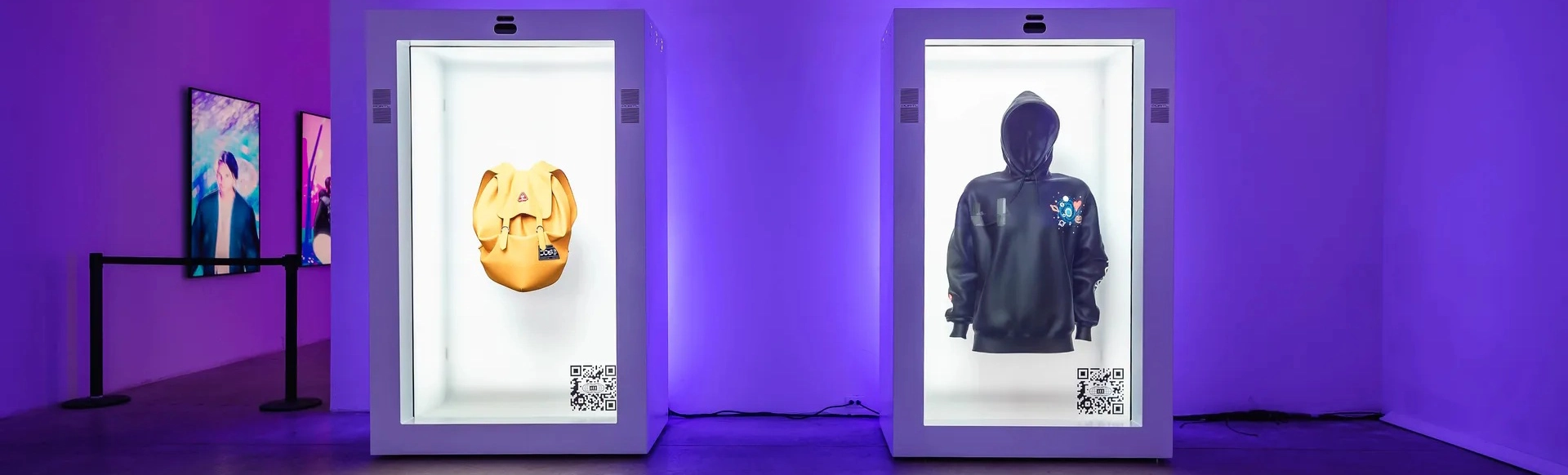
Holographic displays create the perception of three-dimensional objects or figures existing in physical space — without a screen, without a headset, and without the audience needing to do anything to perceive them. That frictionlessness is a significant advantage in high-footfall event environments where asking someone to put on a headset creates a barrier.
The hologram market is growing in parallel with the broader immersive tech sector, driven by live events, retail, and brand activations that need to command attention in competitive environments. A holographic product reveal, a life-size brand ambassador, or a floating data visualisation above an exhibition stand creates a stopping moment — the kind of shareable, talk-worthy visual that earns organic reach long after the event ends.
In the UAE, holographic technology has been deployed at government announcements, luxury brand launches, and international exhibitions. The technology is particularly powerful at communicating scale and innovation simultaneously: a brand that can project a holographic presentation is, by implication, a brand at the frontier of what is possible.
Projection Mapping: Transforming Any Surface Into a Story
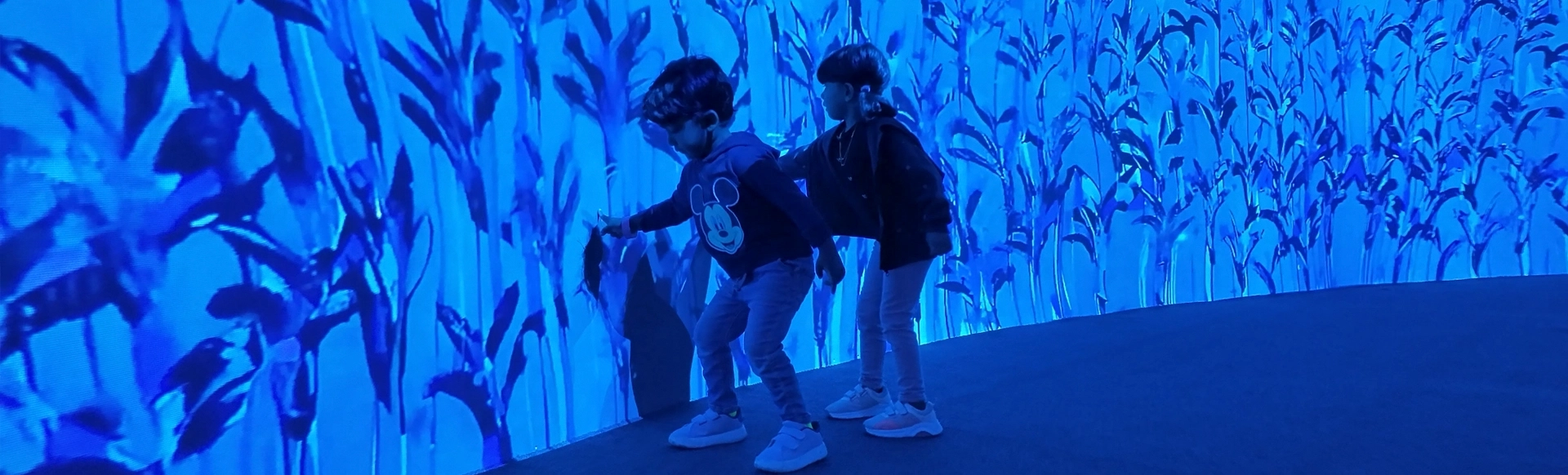
Projection mapping is the technology that turns any surface — a building facade, an exhibition stand, a product, a stage, even a room's walls, floor, and ceiling — into a dynamic visual canvas. Using specialist software, content is precisely calibrated to the geometry of the target surface, creating the illusion of movement, transformation, and narrative without any permanent modification to the space.
The global projection mapping market was valued at approximately $4.94 billion in 2025 and is forecast to grow at a CAGR of over 21% through 2030 (MarketsandMarkets, 2025). Its penetration into brand and cultural activations has been rapid, driven by falling hardware costs and the format's inherently viral visual quality.
For experiential campaigns, projection mapping solves a specific creative challenge: it allows brands and organisations to create high-impact visual environments in spaces they do not own and cannot permanently modify. An empty room can be transformed into a gallery. A product can appear to assemble and disassemble in front of an audience. A cultural icon's work can fill an entire room with moving light and colour — giving audiences a perspective on art that a frame on a wall could never provide.
Technology in Practice: Ortmor × Al Fereej Art and Design Festival, Qatar
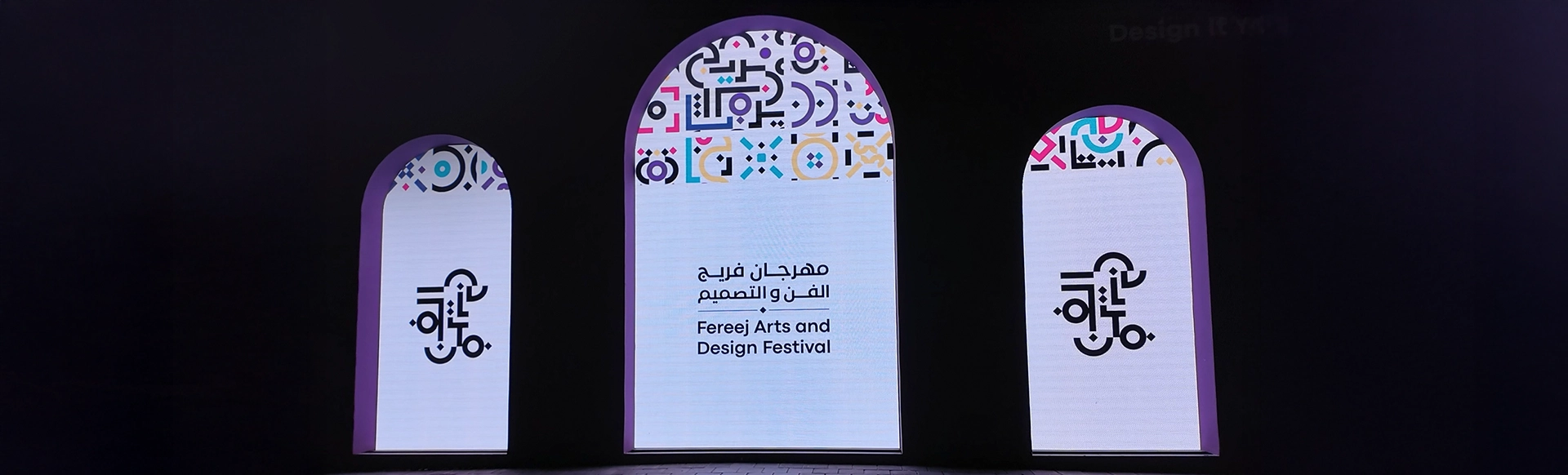
The most effective deployments of immersive technology are not about spectacle for its own sake. They are about solving a specific communication problem — and the Al Fereej Art and Design Festival in Qatar is a clear example of what this looks like in practice.
Commissioned by the Qatar Ministry of Culture, Ortmor Agency was tasked with creating an exhibit at Darb Al Saai in Umm Salal that honoured two of Qatar's most esteemed artists — Ali Hassan and Ali Al Kuwari — in a way that would engage families, art enthusiasts, and the younger generation alike. A traditional gallery was not enough. The brief required technology to do what static display cannot: make art felt, not just seen.
Ortmor developed over eight concepts before finalising three distinct experience zones. A projection mapping room used Resolume software to transform the walls into a continuously looping motion graphic canvas of Ali Hassan's masterpieces — turning still artworks into a living, breathing visual journey through his legacy. An interactive underwater room, inspired by Ali Al Kuwari's artistic vision, transported visitors into a submerged world through blue ripple projections, fiber optic strands simulating glowing underwater grass, infinity mirror effects, and touch-sensitive neon plants that lit up and dimmed in response to physical interaction. A curated art exhibit space anchored both experiences in cultural context through bilingual English-Arabic artist biographies.
The entire build — including demolishing and reconstructing structures to create the underwater room — was completed in five days. Over the festival's six-day run, thousands of visitors attended. The interactive installations, particularly the underwater room, became the festival's defining highlight and set a new benchmark for immersive cultural events in the region.
The lesson for brand marketers is precise: the right technology, deployed with genuine creative intent, does not just deliver an experience — it delivers a memory that outlasts the event itself. Read the full case study here.
What This Means for Your Next Campaign
Ortmor's experiential marketing services are built around exactly this principle. From concept through projection mapping, augmented reality, holographic displays, and interactive installations, every technology decision serves a singular objective: making your audience feel something they will not forget.
Technology does not automatically create great experiential marketing. Poorly deployed AR is just a gimmick. A VR headset in the wrong context is a barrier. Projection mapping without a story is just light. The differentiating factor is always strategic intent — understanding which technology solves which creative or communication problem, and deploying it with precision.
Conclusion
The technologies redefining experiential marketing — AR, VR, holograms, and projection mapping — are no longer experimental. They are deployable, scalable, and commercially proven. In the UAE and GCC, where audiences have been conditioned to expect the extraordinary, they are increasingly the minimum viable standard for organisations that want to be taken seriously.
The brands and institutions that will lead are not those with the biggest budgets. They are the ones who understand how to use technology to tell stories that stick. If your next campaign is still being built around static displays and printed materials, the gap between you and your competitors is widening every event season.
Explore how Ortmor approaches technology-driven experiential marketing for enterprise brands and government clients across the UAE and GCC.
Frequently Asked Questions
Q: How does technology enhance experiential marketing? A: Technology enhances experiential marketing by enabling brands and organisations to create immersive, interactive, and personalised environments that go far beyond what physical installations alone can achieve. AR, VR, holograms, and projection mapping each allow brands to control sensory input, tell spatial stories, and engage audiences in ways that generate stronger emotional responses, higher brand recall, and significantly more social sharing than traditional marketing formats.
Q: What is the difference between AR and VR in experiential marketing? A: Augmented reality overlays digital content onto the real world — typically through a smartphone or tablet — allowing audiences to interact with brand content without leaving their physical environment. Virtual reality replaces the physical environment entirely via a headset, giving brands total control over every sensory input. AR is better suited to high-traffic, accessible activations; VR is more effective for deep, immersive experiences where full audience attention is required.
Q: Is projection mapping expensive for brand activations? A: Projection mapping has become significantly more accessible as hardware costs have fallen and software tooling has matured. Investment varies based on surface size, content complexity, and event duration — but the format is now regularly deployed across a wide range of budgets, from single-product showcases to full room transformations like Ortmor's work at the Al Fereej Art and Design Festival in Qatar. The ROI case is strong given its high visual impact and ability to transform existing spaces without permanent modification.
Q: What types of brands use holographic displays in marketing? A: Holographic displays are used across luxury fashion, automotive, government and tourism, technology, and entertainment. They are particularly common in the UAE and GCC at government announcements, product launches, and large-scale international exhibitions — where the technology's visual impact and frictionless audience experience make it highly effective in competitive event environments.
Q: How do I choose the right technology for my experiential marketing campaign? A: The right choice depends on your campaign objective (awareness, engagement, conversion), your audience context (footfall volume, dwell time, device availability), and your content strategy (is the story visual, interactive, spatial, or narrative-driven?). The most effective campaigns combine technologies with each serving a distinct role — as demonstrated by Ortmor's Al Fereej Festival build, where projection mapping animated a static art collection and interactive installation technology created a fully sensory, participatory environment within the same venue.
Sources & References
-
Grand View Research — Immersive Experience Market Size & Forecast (2024)
-
Markets and Markets — Augmented and Virtual Reality Market Report (2025)
-
BrandXR — The Business Case for Augmented Reality Advertising (2025)
-
MarketsandMarkets — Projection Mapping Market Size & Forecast (2025)
-
Kelly Jo Sands, DirecTV — Expert quote via Event Marketer
-
Ortmor Agency — Al Fereej Art and Design Festival 2023