Mixed Reality Installations & Projection Mapping Spaces
Over the last several years, the limits of the physical and digital worlds have gradually merged. The technologies that were once only a concept in scientific fiction are actually becoming the core parts of our lives, particularly in the case of public areas. The most significant change with these kinds of technologies is the emergence of mixed reality installations and the utilization of projection mapping in public art, which are two technological means very differently designed for the same purpose, i.e., to change our perception of and interaction with the environment.
The world has changed to such an extent that we no longer have to wait to see public art in the form of lifeless statues or regular paintings hung on walls. The evolution of public spaces is being influenced by immersive spatial design, which brings art and technology together to form a new breed of profound, communicative environments that attract and involve the audience. In the current online article, we shall discuss the impact of mixed reality installations, projection, and other technologies on public places and the reasons why these novelties are the future of urban design.
Understanding Mixed Reality Installations
Mixed reality (MR) is a single term that sometimes refers to augmented reality (AR) or virtual reality (VR), but it is a different idea which connects the real world with the digital one in the same time. To give an example, MR is not like conventional AR that overlays digital content onto the real world using a screen or glasses, instead, MR generates a space where physical and digital objects are still and live. Such a smooth interconnection empowers the users to touch and manipulate the digital objects as well as the real ones at the same time.
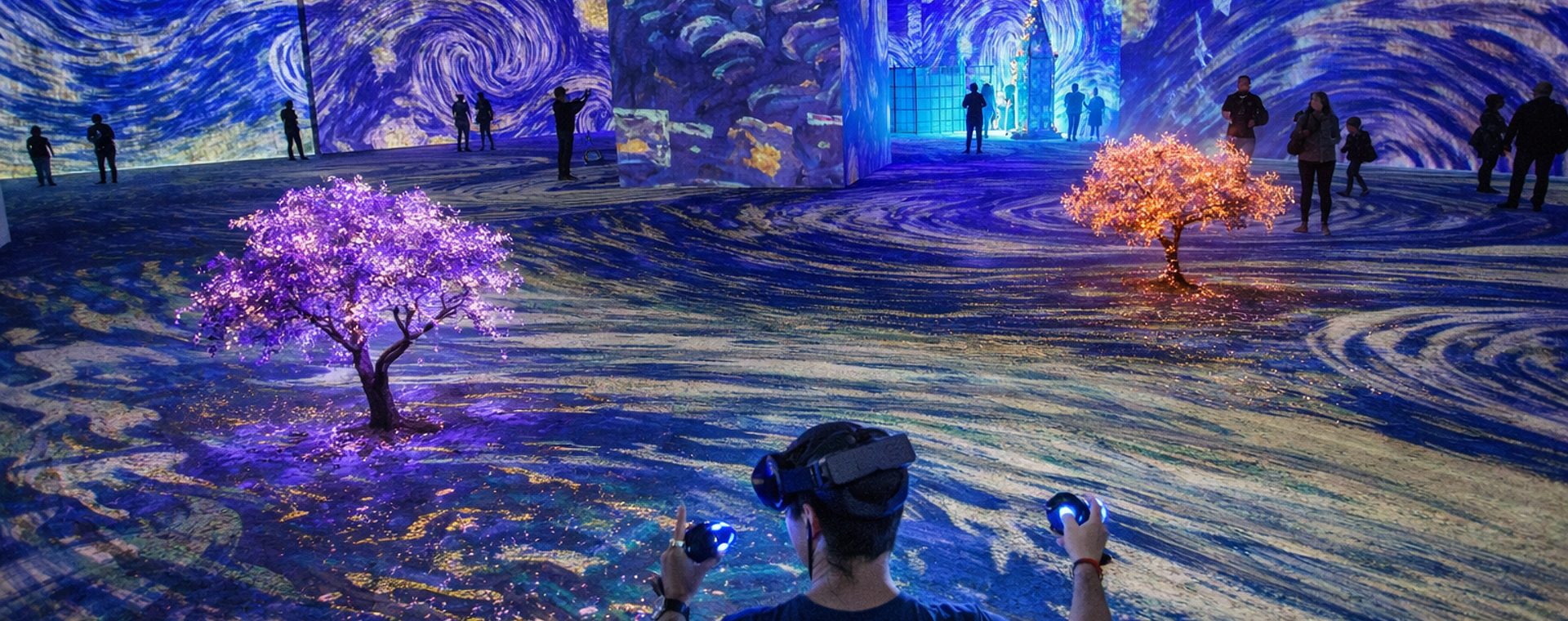
Mixed reality installations may be anywhere in public places, and they can be a different things. Just imagine you enter a public park and you see an art installation that reacts to your being there. Maybe it is a digital tree that grows according to your movements or a sculpture that changes its shape to an animated character when you get closer. The combination of the real world with ever-changing, lively, interactive digital content is giving people new ways of meeting art and their environment which is creating an entirely different experience in public places.
The Power of Projection Mapping in Public Art
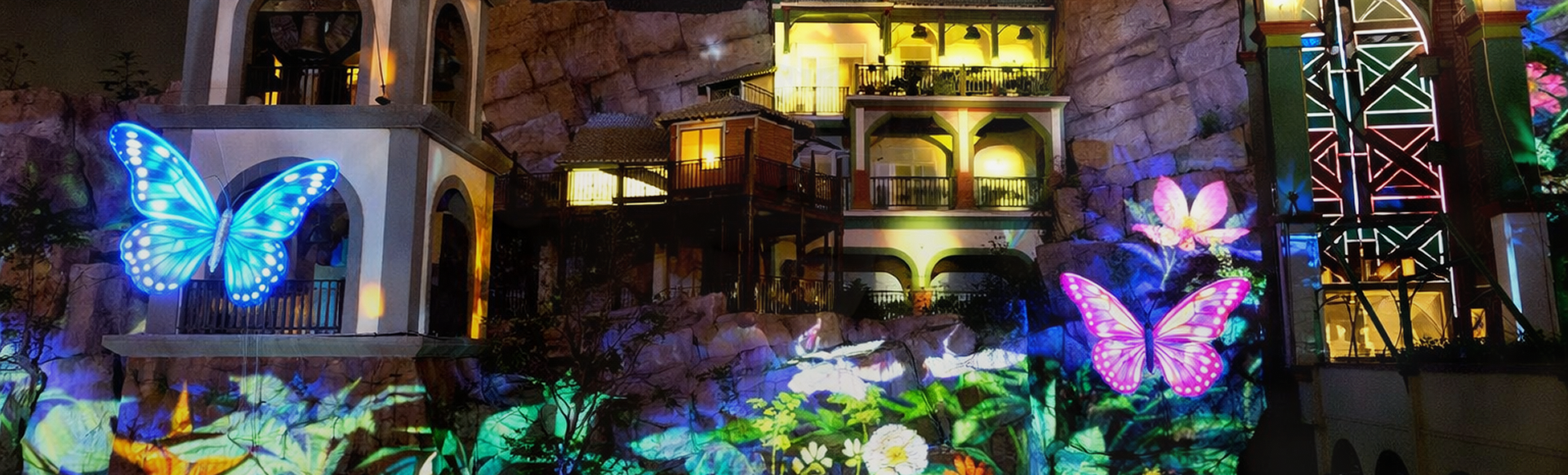
Yes, mixed reality installations certainly offer a level of interactivity, however, projection mapping in public art is a different kind of asterliness work by physically changing the surfaces of the space into a kind of a digital-visual content dynamic canvases. By utilizing powerful projectors, projection mapping is capable of turning not only the exteriors of the buildings, the sculptures but also the vast tracts of lands into the 3D visual feast kind of the things. The method is popularly employed to fashion the impressively charming visual stories regaled to the audiences thereby breathing the lifeless public art with such infectious vigor of the most of recent creation possibilities.
Projection mapping in public art is a phenomenon that has attracted people's attention and is now the talk of the town, especially when it comes to such monumental works as the reshaping of cities turning them into artists' studios. What if strolling through an urban park after sunset, the front of the old building gets the life of the drawn pictures by the motion, the flawless patterns, and the interactivity elements? Such a technique of public art can also make the architectural works appear as if they are undergoing the change, or they are throbbing, or even telling a story. With the help of projection mapping, public spaces can be converted into the places full of the people and their emotions, storytelling, or simply an indulgence of their senses.
Why Immersive Spatial Design is Likely the Next Wave of Public Areas
Immersive spatial design is all about creating the spaces that not only please the eyes of the visitors but attract their attention through different senses as well. To differentiate them from regular spaces, which are only made to serve specific functions, immersive spaces are conceived not only to attract, but also to educate and finger the people who stare them. The projection mapping combined with the mixed reality installations is where the real power lies to make a significant change.
An immersive spatial design is capable of generating surroundings that are not only alive but also highly engaging and interactive. To illustrate it, a mixed reality installation at a museum may offer those who attend it the opportunity to engage with the exhibits in such a manner that was unimaginable before, like resuscitating ancient artifacts or giving the opportunity to the users of virtual tours of the historical sites. The use of projection mapping in public parks can allow the trees, sculptures, and fountains to interact with the visitors as they move and, thus, engage the visitors to have a sense of relationship with the place.
Globally, this transformation to immersive design is evident in the cities of the whole world. The cities that are big and populous are turning towards these new technologies not only to improve the experience of visitors but also to make the public spaces more lively and, in addition, to enhance the feeling of belonging to a community. The beauty of the use of projection mapping and mixed reality installations is their turnover capability of the public spaces that are ordinary into stunning open-air environments which not only enchant the visitors but also call for their greater involvement.
The Role of AR in Public Installations
Even though mixed reality installations and projection mapping have been the talk of the town for quite some time, AR public installations are an entirely different matter of immersive technology, and they seem to be slowly becoming the main attraction in the show. Augmented reality (AR) is basically the digital content that is superimposed on the real world view that you get through your eyes, camera, or AR glasses. The difference with AR is that the digital content is fixed concerning the physical world, whereas with MR, the digital content is more blended with the surroundings.
Due to their interactive nature, AR public installations in public areas can become tourists' real-time helpers, providing them with the information they seek right away and thus making their visitor experience awesome. For instance, an installation with AR in the museum can offer visitors the opportunity to direct their phones to some artwork in order to see more details, watch the making video, or even interact with a virtual artist. Likewise, in cities, AR public installations can become a source of several digital elements like navigation guides or virtual characters, consequently advancing the user’s bond with the space.
One of the most amazing effects that AR could be used for is to be a platform for a more individualized experience. Visitors might be chosen to explore unique content through their smartphones or AR glasses based on where they are, what they like, or even their conduct. This makes AR public installations an excellent engagement tool for towns and cultural institutions willing to break the ice with visitors and get them involved in new and interesting ways.
Bringing Together Projection Mapping, MR, and AR for the Ultimate Public Experience
When combined, projection mapping, mixed reality installations, and AR public installations have the potential to revolutionize the way we experience public spaces. These technologies can work together to create fully immersive environments where the physical world blends seamlessly with the digital, offering users an experience that is both interactive and visually stunning
Take the case of projection mapping that makes buildings "move" with the help of animated visuals in a city square that you presumably just walked into. Mixed reality installations in that case might respond to your movements and change the environment around you as you approach certain areas. At the same time, an AR public installation might be offering you some more information, guiding you through the space and giving you a better insight of the art and architecture around you. Such a fusion of different technologies culminates in an experience which is not just a mere visual spectacle but rather an interactive journey that deeply and significantly engages the user.

The Benefits of Immersive Technologies in Public Spaces
The use of mixed reality installations, projection mapping, and AR public installations in public areas brings a multitude of advantages to cities and the people who use these areas. The important benefits include:
Increased Engagement: Immersive technologies provide users with different interaction modes that lead to an increase in public space usage and people’s participation. Whichever way it is through an interactive art installation or a mixed reality experience the technologies in question generate the users’ interest and involve them to a great extent.
Enhanced Tourism: Urban centers that adopt immersive spatial design in their public areas can lure tourists who seek novel and interactive experiences. Public art installations, parks, cultural centers that employ such technologies become primaries for the visitors, and, hence, stepping-in of the new people is being increased.
Community Building: The public installations that are immersive in nature can help establish a community feeling as they draft the ways for social communication and cooperation. In any case, it might be through experiencing a park together or by doing interactive art in a public square, these installations unite people.
Branding and Identity: By using projection mapping and AR public installations, cities and businesses can acquire some of the strongest branding tools. These technologies, through creating engaging and fun experiences, contribute to a city’s branding campaign and thus produce a great deal of affinity between the space and its visitors.
Overcoming the Challenges of Immersive Technologies
Even though there are so many positive sides to it, the implementation of mixed reality installations and projection mapping in public spaces also meets with problems. The technology calls for a large sum of money to be spent on the building of facilities, the upkeep, and the renewal of equipment, and hence it is expensive. What's more, the technology should be open and easy for all visitors to use, no matter whether they are tech-savvy or not. Finally, urban planners and designers must be sure that these installations will not only visually complement, but also contribute to, the overall functionality of the space without distracting from the environment’s natural beauty.
Final Thought
Once technology step by step keeps evolving, public spaces tomorrow will be largely characterized by the artistic use of projection mapping, mixed reality setups, and AR public installations. These immersive technologies have unbounded opportunities a simple example is turning urban parks into interaction-based playgrounds or giving historical landmarks a totally new facet with the help of digital storytelling.
Without a doubt, the very essence of public spaces is to attract, uplift and unite people. When these cutting-edge technologies are properly integrated into city planning, we not only get to design practical environments but also to create places that are alive, changeable, and interactive thus, able to attract people. Our cities are going to be very promising with all these changes as they will turn out to be more lively, interactive, and interconnected than ever, hence, presenting us with novel ways of experiencing the world we live in.