What Is Experiential Marketing? (And Why UAE Brands Are Going All-In)
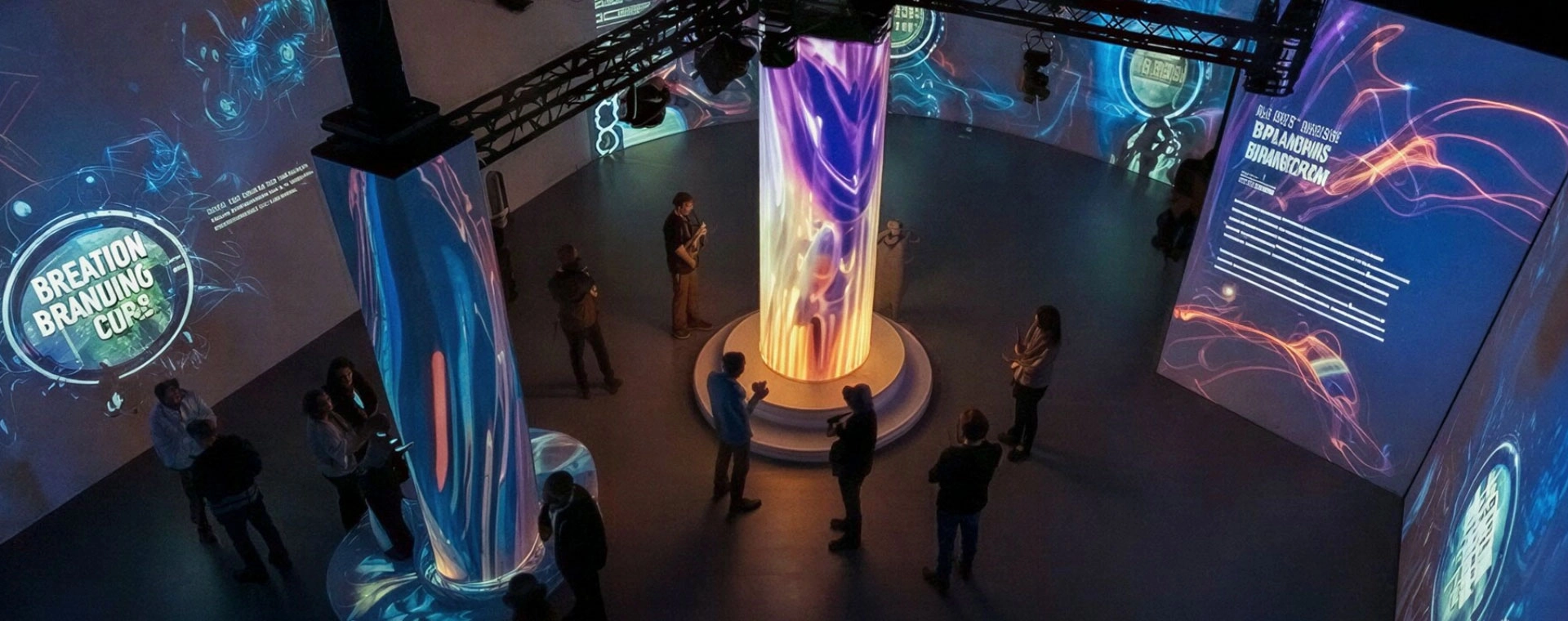
Imagine walking into a mall in Dubai, and instead of a banner ad, a brand pulls you into a fully immersive world — floor projections that react to your steps, a holographic product demo floating in front of you, and a personalised story unfolding in real time. That is not the future. That is experiential marketing in the UAE today.
Global spending on experiential marketing hit $128.4 billion in 2024, surpassing pre-pandemic levels for the first time (Congruence Market Insights, 2024). Across the UAE and wider GCC, brands are accelerating this investment — and for good reason. In a region where consumers expect premium, memorable engagements, traditional ads simply do not cut through. The brands winning hearts and market share are those creating experiences people live inside, not just scroll past.
This article defines experiential marketing, explains why it works, walks through three real UAE and GCC brand activations, and lays out the business case for making it a core part of your marketing strategy.
The Shift: From Interruption to Immersion
Traditional marketing interrupts. A billboard competes with traffic noise. A pre-roll ad earns a skip. A sponsored post disappears in a feed. The fundamental problem is that these formats talk at people — and modern consumers have become expert at tuning them out.
Experiential marketing takes the opposite approach. Instead of inserting a brand into someone's day, it creates a moment they willingly step into.
This is not a niche preference. 74% of Fortune 1000 marketers expect to increase their experiential marketing budgets in 2025, while 51% of companies globally plan to grow experiential investment continuously through 2026 (EventTrack, 2024). The shift from passive media consumption to active brand participation is no longer a trend — it is a structural change in how brands build relationships.
For UAE marketers, this shift is amplified by context. The country hosts some of the world's most attended events, has one of the highest per-capita luxury spend rates globally, and following the legacy of EXPO 2020 Dubai, has set a regional standard for world-class immersive brand experiences. Audiences here do not just expect quality — they expect to be astonished.
What Is Experiential Marketing? A Clear Definition
Experiential marketing is a strategy that engages consumers through direct, interactive, and often multi-sensory brand experiences — rather than through one-way messaging. It is also called live marketing, engagement marketing, or brand activation.
Where a TV commercial tells you a product makes life better, experiential marketing puts you inside that better life and lets you feel it.
The discipline spans a wide range of formats: pop-up installations, immersive product launches, AR-powered retail environments, projection-mapped events, interactive trade show stands, holographic exhibitions, gamified activations, and hybrid physical-digital experiences. The common thread is participation — the consumer is not an audience member but an actor in the brand story.
"Experiential marketing is one of the few marketing levers that can move attendees through the entire consumer journey in one activation. You can create awareness, change perception, increase consideration, sample and trial, drive purchase and advocacy. That's pretty powerful." — Vicki Surprise, Co-Founder, Clamor

The result is something no digital impression can replicate: a physical memory attached to your brand.
Three UAE & GCC Brand Activations That Delivered Results
1. EXPO 2020 Dubai — The World's Largest Experiential Stage
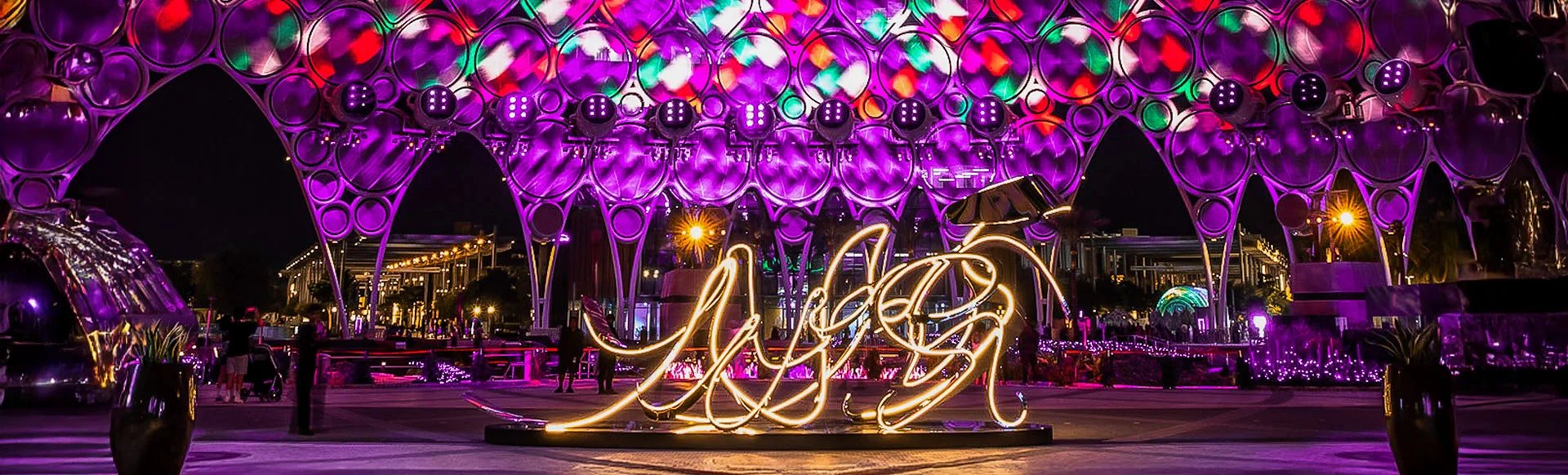
EXPO 2020 Dubai remains the benchmark for experiential marketing at scale in the region. Across 200 national and brand pavilions, the event attracted over 24 million visitors — making it one of the most attended world expos in history. Brands and governments invested in AR, holograms, interactive displays, and multi-sensory storytelling to compete for attention and share of conversation.
Saudi Arabia's pavilion drew approximately 5 million visitors on its own, using immersive installations to reposition the nation's brand to a global audience. The UAE Pavilion deployed augmented reality and holographic technology to showcase the nation's achievements in a format that was cinematic, tactile, and deeply personal.
The lesson for brand marketers: when a competitor stands one pavilion away, a banner ad is irrelevant. The experience is the message.
2. Vodafone × COMEX Technology Show 2022 — Six Rooms, One Vision

At the 31st edition of the COMEX Technology Show in Oman, Vodafone partnered with Ortmor Agency to turn its exhibition stand into six fully distinct immersive rooms — each built around a different technology and a different dimension of Vodafone's brand vision.
Visitors moved through an LED mirror cube pre-show room, a gesture-controlled interactive Vodafone logo, an AR portal showing Oman's past and future side by side, a touch-and-throw installation asking "how much does the internet weigh?", an infinity mirror room, and a final projection-mapped space connecting a Vodafone eSIM to the computing power behind the Apollo 11 moon landing.
The entire concept — design, content, development, testing, and a companion virtual platform accessible by QR code — was delivered in two weeks and set up on-site in two days. The activation gave Vodafone's debut COMEX appearance a presence that was impossible to walk past and hard to forget. Read the full case study here.
3. Samsung Galaxy Experience Space, Dubai Mall
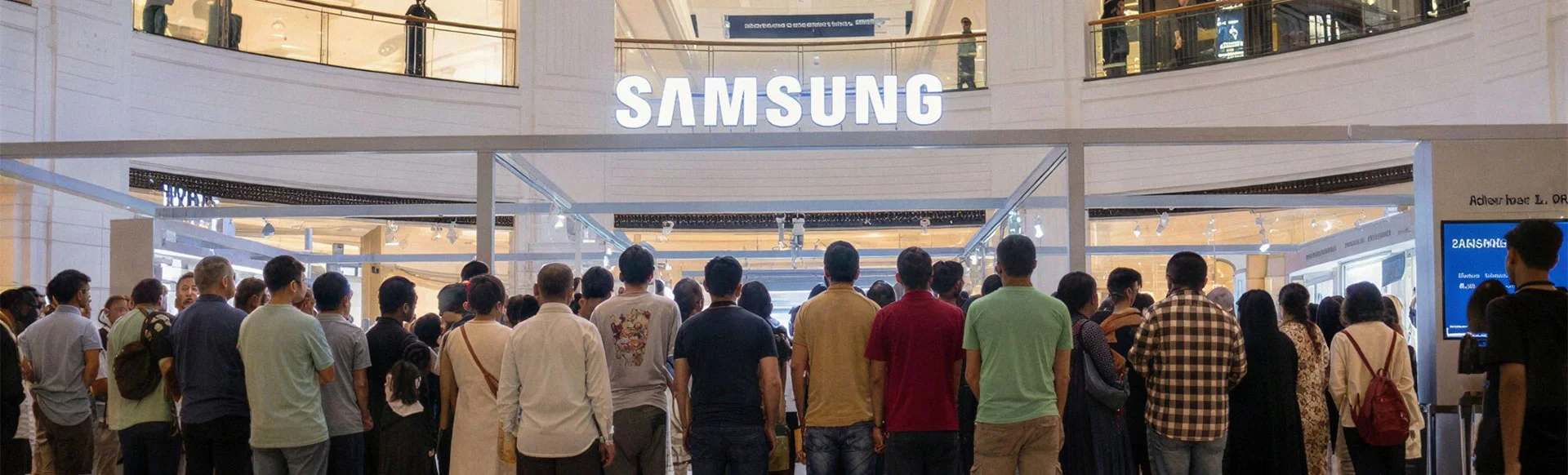
Samsung transformed a section of Dubai Mall into a multi-zone, hands-on Galaxy Experience Space — inviting consumers to interact with the latest devices through immersive, AI-powered challenges and themed experiential zones. Rather than a traditional retail demonstration, each zone was designed to provoke an emotional response: curiosity, delight, ambition.
The Galaxy Open Market pop-up, launched in Dubai following the Galaxy Unpacked event, gave fans first-hand access to the newest innovations through direct interaction — not a screen, not a spec sheet, but the product in their hands in a curated environment designed to make them feel like early adopters of the future. For a brand competing at the top of the electronics market in one of the world's most demanding retail environments, that kind of sensory engagement converts browsers into believers.
The Business Case: Why the Numbers Justify the Investment
Sceptics of experiential marketing often cite cost. The counter-argument is ROI.
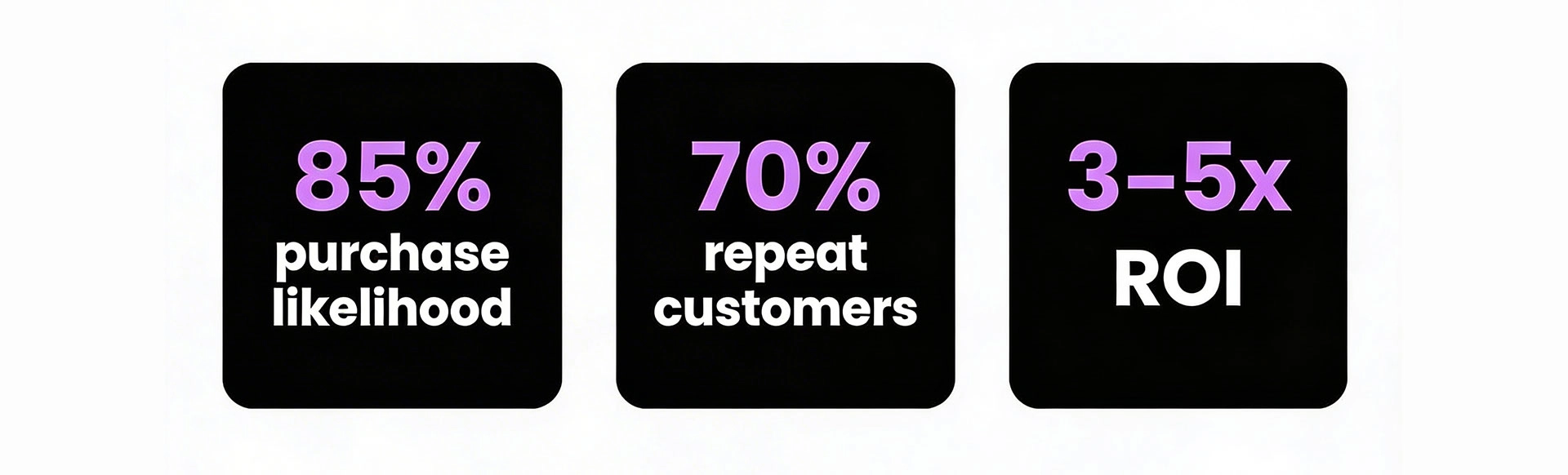
Research consistently shows that experiential campaigns deliver 3:1 to 5:1 returns on spend, with high-performing activations achieving up to 10:1 (Snapbar, 2025). These are not soft metrics — they include purchase intent lift, social amplification value, and post-event revenue attribution.
Consumer behaviour data reinforces the case further: 85% of consumers are more likely to purchase from a brand after attending a live marketing experience, and 70% become repeat customers (EventTrack, 2024). In a market like the UAE, where customer lifetime value is exceptionally high and word-of-mouth carries enormous cultural weight, those repeat purchase rates represent compounding returns.
For B2B brands, the numbers are equally compelling. Event ROI typically ranges between 25% and 34%, according to a survey of over 200 marketing professionals — meaning a well-executed activation programme consistently outperforms many digital advertising channels on a cost-per-acquisition basis.
The question is not whether experiential marketing works. The question is whether your brand can afford not to be present in the spaces where your customers are forming memories.
What Experiential Marketing Looks Like at Ortmor's Scale
Ortmor Agency designs and delivers experiential marketing activations across the UAE and GCC that integrate the full spectrum of immersive technologies — from projection mapping and holographic displays to AR-powered environments and permanent interactive installations.
Working primarily with government bodies, enterprise brands, and major MNCs, Ortmor brings together creative strategy, technical engineering, and production expertise under one roof. This means a concept does not just look impressive in a deck — it performs on the day, in front of tens of thousands of people, in real UAE conditions.
Whether the brief calls for a product launch that generates a week of social content, a pavilion experience that changes how an audience thinks about a brand, or a permanent installation that turns a retail space into a destination — the common starting point is always the same: what do we want the audience to feel, and how do we engineer that feeling at scale?
Explore Ortmor's case studies to see how this translates into production.
Conclusion
Experiential marketing is not a premium line item for brands with unlimited budgets. It is the most direct route to the thing every marketer is ultimately trying to create: a memory that moves people to act. In the UAE — a market defined by ambition, spectacle, and discerning consumers — it is increasingly the baseline expectation, not the differentiator.
The brands that will lead the next decade of GCC marketing are not those with the biggest media spend. They are the ones investing in moments people will talk about, photograph, share, and remember. The infrastructure to create those moments exists. The question is whether your next campaign will be one of them.
To discuss your next activation, explore Ortmor's experiential marketing services.
Frequently Asked Questions
Q: What is experiential marketing? A: Experiential marketing is a strategy that engages consumers through live, interactive, and often multi-sensory brand experiences rather than one-way advertising messages. It includes brand activations, immersive installations, pop-ups, AR/VR experiences, and event-based engagements designed to create a direct emotional connection between a consumer and a brand. The goal is to generate a physical memory — something no banner ad or social post can replicate.
Q: How does experiential marketing differ from traditional marketing? A: Traditional marketing broadcasts a message to a passive audience — think TV commercials, billboards, or display ads. Experiential marketing inverts this model: the consumer becomes an active participant in a brand story. Rather than telling someone a product is exciting, experiential marketing creates the conditions for them to feel that excitement directly. This produces stronger brand recall, higher purchase intent, and significantly more social sharing.
Q: What ROI can brands expect from experiential marketing? A: Research shows that experiential campaigns typically deliver 3:1 to 5:1 returns on spend, with top-performing activations reaching up to 10:1 ROI (Snapbar, 2025). Separately, 85% of consumers report being more likely to purchase after attending a live brand experience, and 70% become repeat customers — metrics that compare favourably to most digital advertising channels, particularly for high-consideration purchase categories.
Q: Why are UAE brands investing more in experiential marketing? A: The UAE has one of the most brand-literate, experience-driven consumer bases in the world. Following EXPO 2020 Dubai — which attracted 24 million visitors across 200 immersive pavilions — the benchmark for brand engagement has been permanently raised. Combined with the region's government investment in smart cities, entertainment infrastructure, and tourism, UAE brands operate in an environment where immersive experiences are expected, not exceptional.
Q: What technologies are used in experiential marketing activations? A: Modern activations draw on projection mapping, augmented reality, holographic displays, interactive LED installations, AI-powered personalisation engines, and gamified physical environments. In the UAE, agencies like Ortmor combine multiple technologies within a single activation — as demonstrated in the Vodafone COMEX build, which wove together AR, gesture interaction, projection mapping, and a digital virtual platform into one coherent brand experience.
Sources & References
-
Congruence Market Insights — Experiential Marketing Service Market Trends (2024)
-
EventTrack / Mosaic — EventTrack Consumer & Corporate Study (2024)
-
Snapbar — 30+ Experiential Marketing Examples with ROI Data (2025)
-
Vicki Surprise, Clamor — Expert quote via Event Marketer / EMS 2024
-
Think with Google — How Dubai Expo 2020 captured 250 million virtual visitors' hearts
-
Wikipedia — Expo 2020 Pavilions
-
Samsung Gulf — Samsung Galaxy Experience Store, Dubai Mall
-
Ortmor Agency — Vodafone at COMEX Technology Show 2022